
Radiographers & medical staff
See your dose rate as you work, instead of waiting months for a badge report. Use it alongside, not instead of, your workplace dosimetry badge.

A pocket-sized scintillation dosimeter that shows gamma and X-ray dose rate in real time. Small enough for a pocket, precise enough for professionals.
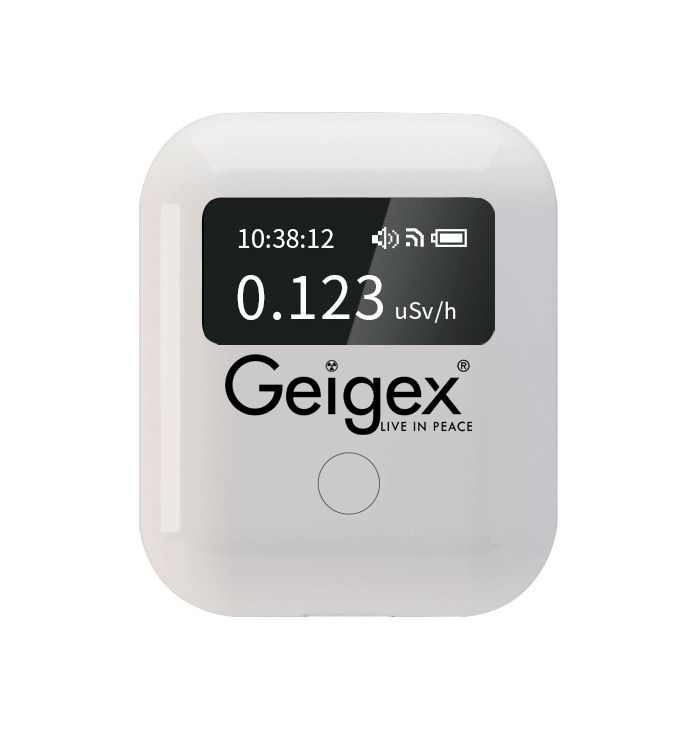
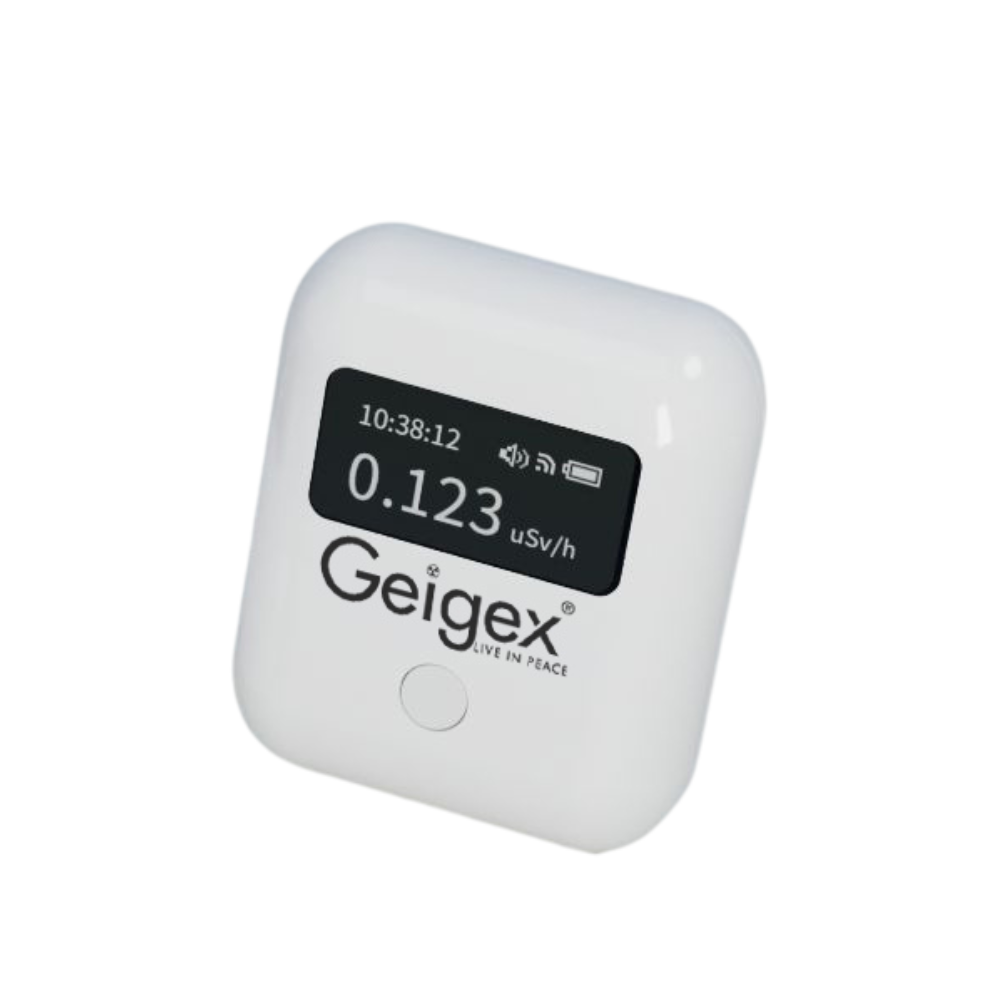
The Geigex Gi-01 measures gamma and X-ray radiation from 0.01 µSv/h to 10 mSv/h, weighs 60 g and runs for about 500 hours on two AAA batteries.
It measures gamma and X-ray radiation in the air around you, both as a live dose rate and as a running total. It does not measure alpha or beta radiation, radon, or radioactivity in food and drink.
The Gi-01 is for anyone who wants to see their own radiation exposure as it happens, from radiographers and aircrew to researchers and travellers.
See your dose rate as you work, instead of waiting months for a badge report. Use it alongside, not instead of, your workplace dosimetry badge.

Cosmic radiation rises at cruising altitude. Watch the live reading on each flight and keep a running total of your accumulated dose.

Small enough for a pocket or carry-on, and allowed on flights. Check readings on the plane, in a new city or at the beach.

A quick second reading for gamma and X-ray sources, with 0.001 µSv/h display resolution and a log of accumulated dose.

A personal check on gamma and X-ray dose rate near equipment and sources, with an audible alarm at the threshold you set.

Radiation is a natural part of the environment. The Gi-01 shows what is around you, so you can understand your own surroundings.
When gamma or X-ray radiation hits the Gi-01's solid scintillation crystal, the crystal gives off tiny flashes of light. The sensor counts and measures those flashes and converts them into a dose rate.
| Scintillator (Gi-01) | Geiger–Müller tube | |
|---|---|---|
| Sensor | Solid crystal | Gas-filled tube |
| Density | High — more radiation interacts | Low |
| Size | Very compact | Needs room for the tube |
| Response | Fast | Slower at low levels |
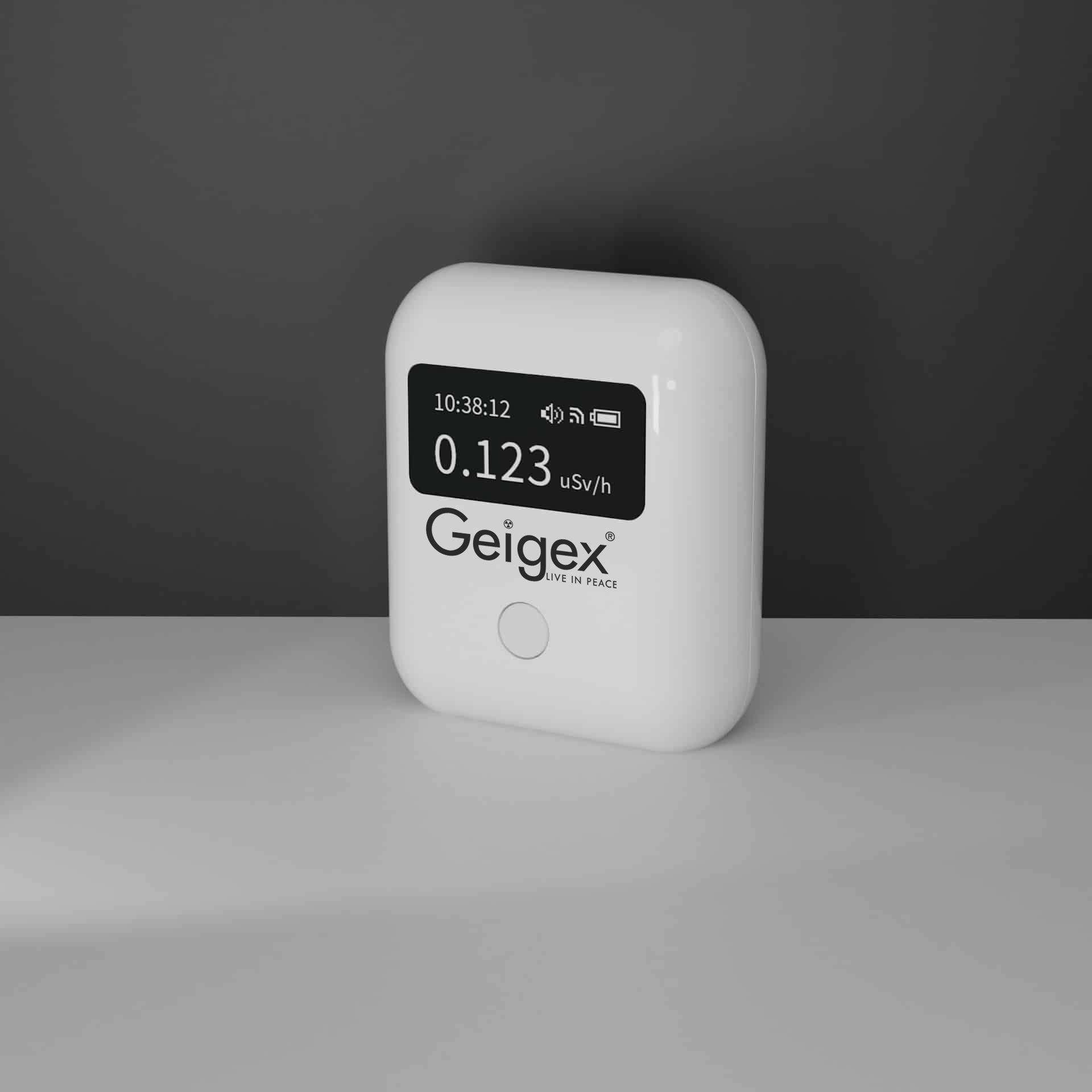
| Radiation types measured | Gamma, X-ray |
|---|---|
| Not measured | Alpha and beta radiation; not for testing food or drink |
| Dose-rate range | 0.01 µSv/h – 10 mSv/h |
| Minimum measurable value | 0.09 µSv/h |
| Display resolution | 0.001 µSv/h |
| Accumulated dose range | 0.001 µSv – 999 Sv |
| Sensor | Solid-state scintillator, SSM-P2 |
| Display | LCD: dose rate, accumulated dose, date and time |
| Alarm | User-set dose-rate threshold; 60 dB at 10 cm; volume adjustable |
| Connectivity | Near Field Communication (NFC) |
| Power | 2 × AAA batteries (included) |
| Battery life | About 500 hours; about 30 days in power-saver mode |
| Dimensions | 53.5 × 44.3 × 21.3 mm (2.1 × 1.74 × 0.84 in) |
| Weight | 60 g (2.1 oz) |
| Operating environment | 0–40 °C, 20–90 % relative humidity |
| Warranty | 12 months |
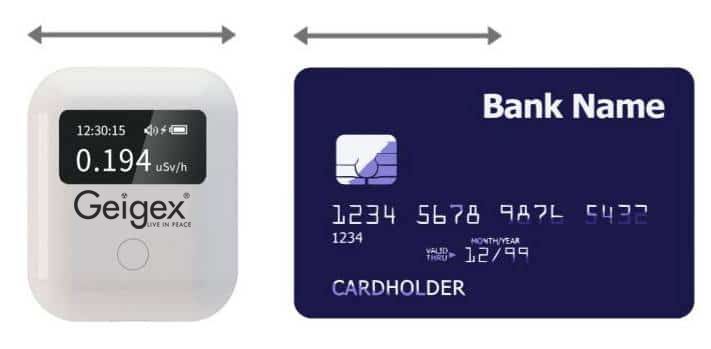
About half the size of a credit card: 53.5 × 44.3 × 21.3 mm and 60 g. It fits in a pocket, clips to a lanyard or bag, and comes with a protective silicone case.
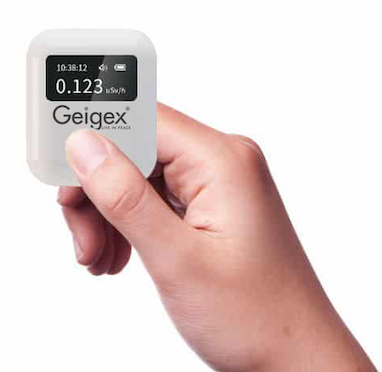
The Gi-01 shows dose rate in microsieverts per hour (µSv/h). 1,000 µSv equals 1 millisievert (mSv), the unit used for yearly doses.
Natural background radiation comes from rocks, soil, the air and space. According to ARPANSA, Australia's radiation safety agency, the average Australian receives about 1.7 mSv a year from natural sources, and worldwide this ranges from about 1 to 13 mSv a year.
Readings rise when you fly, because the atmosphere at cruising altitude (7,000–12,000 m) screens out less cosmic radiation.
Sources: ARPANSA — What is background radiation? · ARPANSA — Flying and health · ARPANSA — Australian experts contribute to global radiation report (UNSCEAR)
The Gi-01 measures gamma and X-ray radiation. It shows the live dose rate in µSv/h and your accumulated dose. It does not measure alpha or beta radiation.
Both measure radiation, but they use different sensors. A Geiger counter uses a gas-filled Geiger–Müller tube. The Gi-01 uses a solid-state scintillator, which is denser, so the device can be smaller and respond quickly. The Gi-01 also keeps a running total of your dose, which is what makes it a dosimeter.
Yes. The Gi-01 runs on two standard AAA batteries and is allowed on flights. The alarm volume can be adjusted.
It depends on where you are. ARPANSA puts Australia’s average natural background at about 1.7 mSv a year, and worldwide natural exposure ranges from about 1 to 13 mSv a year. The Gi-01 reads the external gamma part of that, so typical readings at ground level are a small fraction of a µSv/h.
Readings rise near radioactive material, in areas with naturally radioactive rocks or soil, at high altitude, and especially when flying, because the thinner atmosphere screens out less cosmic radiation.
No. The Gi-01 measures radiation in the air around you. It cannot measure radioactivity in food or water.
Not directly. Radon is a gas that mainly emits alpha particles, which the Gi-01 does not measure. Use a dedicated radon detector for that.
No. If your employer requires a personal monitoring badge (TLD or OSL), keep wearing it. The Gi-01 gives you live readings between badge reports.
About 500 hours on two AAA batteries, or about 30 days in power-saver mode.
53.5 × 44.3 × 21.3 mm and 60 g — about half the size of a credit card.
US$19.99 to addresses outside Australia, and A$9.95 within Australia.
12 months warranty and 14-day change-of-mind returns, in addition to your rights under Australian Consumer Law.
US$399, shipped worldwide, with a 12-month warranty.
Orders are currently processed by our authorised distributor, DosimeterShop.com, which takes cards and PayPal.
Geigex designs compact personal radiation dosimeters. The company is based in Melbourne, Australia.
Contact us at support@geigex.com or +61 410 113 011. Postal address: PO Box 4137, Melbourne University, VIC 3052, Australia.